

.png)
We partnered with community organizations to create a Firewise Crevice Garden at Historic Crail Ranch — a demonstration landscape that integrates wildfire resilience, native plants, water conservation, and preservation of the historic mountain landscape.
Construction of the garden was completed in fall 2025, with planting scheduled for the first week of June. We’ll celebrate the official opening with a ribbon-cutting ceremony during the Big Sky Wildflower Festival on July 9 at noon. Join us!
.png)
Community Collaboration
.png)
With gratitude, we extend our sincere thanks to the many partners and supporters helping bring this project to life.
.png)
Our Garden's Story
At the Historic Crail Ranch in Big Sky, a new kind of garden is taking root — one shaped not only by beauty, but by the realities of living in the fire-adapted landscapes of the American West.
Surrounding the historic Michener Log Cabin, Grow Wild and community partners are creating a Firewise Crevice Garden: a landscape designed to demonstrate how wildfire resilience, native habitat, water conservation, and sense of place can exist together.
Here, stone and wildflowers tell a story of adaptation — one increasingly important across the Greater Yellowstone Ecosystem.
Rethinking How We Landscape
For generations, landscapes around homes and buildings have often been densely planted against buildings.
Yet as wildfire seasons grow longer and more severe, communities across the West are learning that the first five feet around a structure matter enormously.
This “noncombustible zone” is one of the most important areas for reducing the risk of ignition from wind-driven embers.
The challenge is not simply removing plants. It is helping people imagine something different: landscapes that are resilient, ecologically rich, and deeply rooted in the character of the West.
A New Vision
Large stones and carefully spaced native plants create natural breaks that help reduce continuous fuels near structures.
Deep-rooted, drought-tolerant species thrive within narrow rock crevices, where moisture lingers and weeds struggle to establish.
While no plant is completely fireproof, thoughtful design, plant selection, and ongoing stewardship can significantly reduce wildfire risk while supporting pollinators and wildlife habitat.
This project demonstrates that defensible space does not need to feel barren. It can feel alive.
The Firewise Crevice Garden aims to:
-
Demonstrate firewise landscaping techniques appropriate for mountain communities
-
Inspire landowners to adopt home hardening and defensible space practices
-
Showcase native, drought-tolerant plants suitable for resilient landscapes
-
Protect historic structures through thoughtful landscape design
-
Support pollinators, biodiversity, and wildlife habitat
-
Provide a free, publicly accessible educational resource
-
Strengthen long-term community wildfire resilience


More Than A Demonstration Garden
The Firewise Crevice Garden is intended to serve as a living classroom and community resource for years to come. Visitors will be able to experience practical strategies that can be adapted at any scale, including reducing combustible materials near structures, integrating noncombustible hardscaping, selecting climate-adapted native plants, and maintaining healthy, well-spaced vegetation.
As wildfire increasingly shapes life across the West, projects like this help communities move from reaction toward resilience — protecting homes, historic places, wildlife habitat, and neighboring public lands alike.
The photo with Abby shows the crevice garden at Rocky Mountain Gardens in Missoula — the inspiration for this project!

.png)

A Garden Shaped by Place
The garden itself will echo the dry alpine slopes, rocky ridgelines, and windswept valleys of southwest Montana.
Plants have been selected not only for resilience, but for their ability to reflect the spirit of this landscape across the seasons.
In spring, bitterroot and biscuitroot will emerge among the stone.
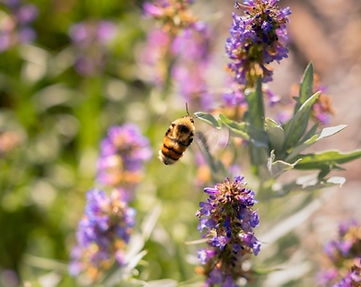
Summer brings penstemons, phlox, buckwheat, and silverleaf phacelia alive with native bees and butterflies.
Kinnikinnick, stonecrop, sagebrush, blue grama grass, and jungrass provide year-round structure and texture, while yucca and goldenrod add late-season form and color.
Together, these species create a landscape that is both practical and expressive of the Mountain West — resilient in drought, supportive of wildlife, and adapted to life alongside fire.
*Note - Gardens, like the landscapes they reflect, are always evolving. Due to nursery crop failures and limited native plant availability, some species may not be planted during the garden’s initial installation. Over time, additional species — and perhaps entirely new discoveries — will be thoughtfully added as the garden continues to grow and mature alongside the landscape it celebrates.


